Normal surfaces
240Retain textures, seams and reflections to define non-defect regions.

PROJECT FOCUS / MFG-001
Industrial vision · Case study
Use normal textures and defect samples to agree annotation rules for metal surfaces. Deliver region labels with indexes that support review.
← Back to case studies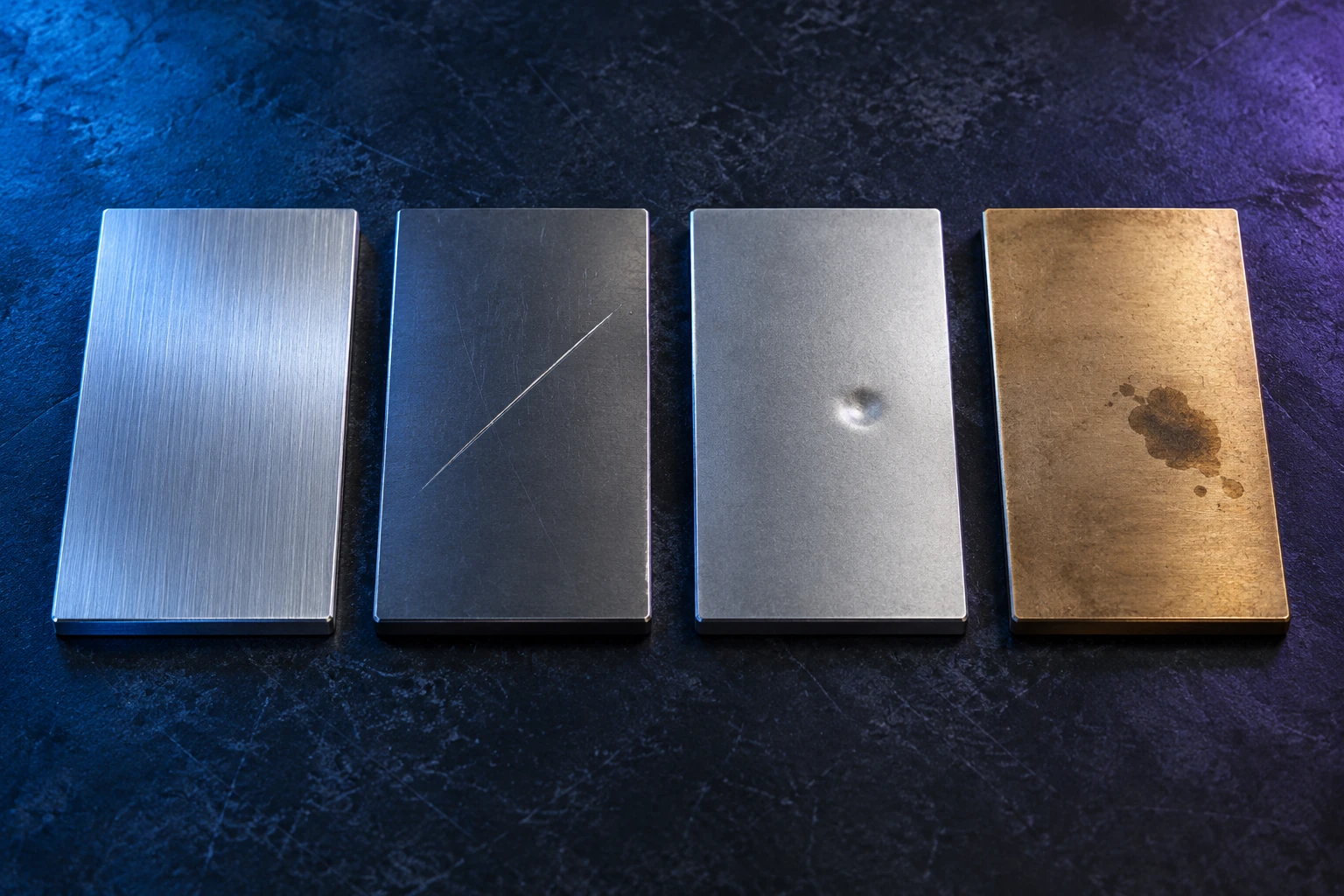
THE BRIEF
Organize images and labels for training and review in surface inspection. The priority is distinguishing defects from normal texture, rather than labeling every visual difference as a defect.
SCENE COVERAGE
Retain textures, seams and reflections to define non-defect regions.
Distinguish thin scratches from machining texture and annotate visible boundaries.
Use visible shading to determine extent without inferring hidden areas.
Separate discoloration, deposits and inconclusive appearances.
FROM CHALLENGE TO METHOD
01 / THE APPROACH
Include difficult samples in the pilot, record normal texture and uncertainty, and establish positive and negative examples.
01 / THE APPROACH
Agree rules for visible regions, connected regions and small defects before batch annotation.
01 / THE APPROACH
Group by component and capture batch, check near-duplicates and retain split rationale.
REVIEW & HANDOVER
Check false defect labels on normal texture, missing defects and handling of uncertainty.
Review contours, out-of-bounds regions and overlaps; do not equate region counts with image counts.
Ensure every image has a status record and label coordinates match image dimensions.
Link files, components, primary scenes and batches.
Store normal states, defect regions and uncertainty fields.
Include class definitions, issue lists and rule versions.
WHAT TO TAKE FORWARD
Agree the rules using normal and borderline samples before scaling defect annotation. Agree the data scope, labeling policy and review criteria together.
MORE PROJECT PERSPECTIVES
YOUR NEXT DATA PROJECT
To frame a similar pilot, share: Task goals, product categories, capture conditions, defect definitions and shareable representative samples.